
Toyota Land Cruiser and the Rise of Rugged Luxury
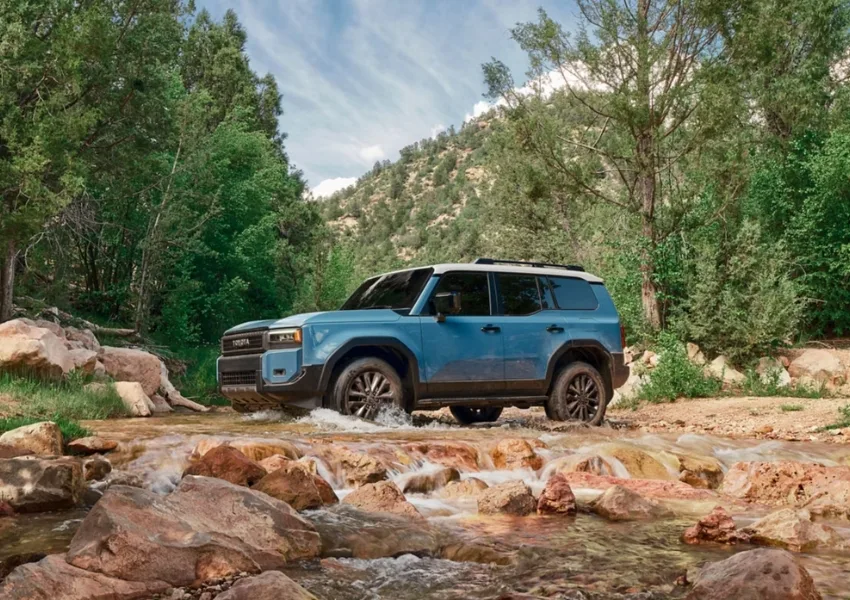

Toyota Land Cruiser 2026
Image Credit: Toyota
If you look at the Toyota Land Cruiser 2026, you are looking at more than just another modern Luxury SUV. You are looking at a nameplate that has been shaping serious off-road capability since 1951. Since arriving in the United States in 1958, the Land Cruiser has built a reputation for durability, longevity, and real-world toughness. In 2025 alone, Toyota sold nearly 44,000 units in the U.S., which tells you something about its staying power.
What makes it different today is not just capability. It is the way it blends rugged DNA with refinement. That balance is what defines the current Luxury ruggedness trend, and few vehicles execute it as convincingly.
A Heritage Rooted In Adventure
The Land Cruiser began as the Toyota BJ in 1951, originally developed as a military-style four-wheel-drive vehicle. It famously climbed to the sixth station of Mount Fuji, proving early that this was no ordinary utility truck. By 1954, the Land Cruiser name was officially adopted, and a legacy was born.
Over eight core generations, from the BJ and FJ Series through the 40, 60, 80, 100, 200, and now the J250 Land Cruiser 2026, the vehicle evolved without losing its purpose. Even as comfort improved, the mission stayed the same. It had to go anywhere.
When you drive one today, you feel that history. It does not feel like a crossover pretending to be tough. It still feels engineered for real 4×4 Travel US conditions.
From Pure Grit To Refined Capability
As the Land Cruiser moved from the early 40 Series to the more modern 200 Series and now the 250 Series, refinement increased steadily. Toyota added better suspension systems, more insulation, higher-quality materials, and modern technology. But it never abandoned the body-on-frame construction that defines serious Best off road cars.
Even in its current form, the Land Cruiser rides on a ladder frame platform, now using the TNGA F architecture for lighter weight and improved rigidity. That structural strength is what gives it the confidence you expect from serious Toyota Adventure engineering.
At the same time, the cabin no longer feels utilitarian. You get premium materials, intuitive layouts, and advanced safety systems. It feels comfortable for daily commuting, yet still ready for remote trails. That is where true Rugged Luxury shows up. It is not about flash. It is about capability paired with comfort
Powertrain That Blends Old-School Torque With Modern Efficiency
Under the hood of the 2025 and 2026 models sits a 2.4 liter i-FORCE MAX Hybrid performance system. This turbocharged inline four hybrid produces 326 horsepower and 465 pound-feet of torque. Those numbers matter less on paper than they do on uneven ground.
Torque is what gets you through rocks, sand, and mud. The hybrid system also delivers a combined 23 MPG, which is respectable for a vehicle with this kind of size and capability. Towing capacity reaches 6,000 pounds.
When you think about Hybrid SUV engineering, this is where Toyota gets it right. It does not chase extreme horsepower numbers. It prioritizes usable torque and reliability.

Land cruiser interior
Image Credit: Toyota
Designed For Real Off-Road Use
The 250 Series was not designed as a lifestyle SUV with cosmetic skid plates. It includes real hardware:
- Full-time four-wheel drive
- Electronically locking center and rear differentials
- Multi-Terrain Select modes
- CRAWL CONTROL for low-speed technical driving
- Stabilizer Disconnect Mechanism for improved articulation
CRAWL CONTROL acts like off-road cruise control. You set the pace and let the system manage throttle and braking while you focus on steering. The Stabilizer Disconnect Mechanism increases suspension travel, keeping tires in contact with uneven surfaces longer.
If you are building Premium overlanding builds or investing in serious Overlanding gear, this platform gives you a strong base. It is engineered for long term durability, not just weekend styling.
A Design That Honors Its Roots
Visually, the 2025 model carries a distinct Boxy SUV aesthetic with 2026 appeal. Upright stance, squared roofline, bold grille, and round headlights give subtle nods to older generations. The Land Cruiser 1958 trim even references early models more directly.
This is not nostalgia for the sake of marketing. It feels intentional. Compared to rivals like the Defender or even in debates such as Land Cruiser vs. Rivian R1S, the Toyota feels grounded in heritage rather than reinvention.
Pricing for the 2026 model starts at $57,600, with two trims available. The top trim reaches $63,674. When you compare that to a base 2026 Defender 110 S at $63,500, the value argument becomes clearer.
Conclusion
Many SUVs today try to combine comfort and capability. Few manage to do both convincingly. The Land Cruiser does not rely on luxury alone. It relies on decades of field-tested engineering. It still feels ready for dirt roads and remote landscapes, yet it handles pavement quietly and confidently. That dual personality is rare.
When you step back and look at How the Toyota Land Cruiser combines luxury and ruggedness for US overlanding, the answer is not complicated. It never abandoned its core purpose. It simply refined it.
You get heritage without compromise. Capability without harshness. Modern tech without sacrificing reliability. That is why, even in a crowded segment of new SUVs and electric competitors, the Land Cruiser continues to define what true rugged luxury should look like.