
Audi Enters Formula 1 With R26 Reveal for 2026
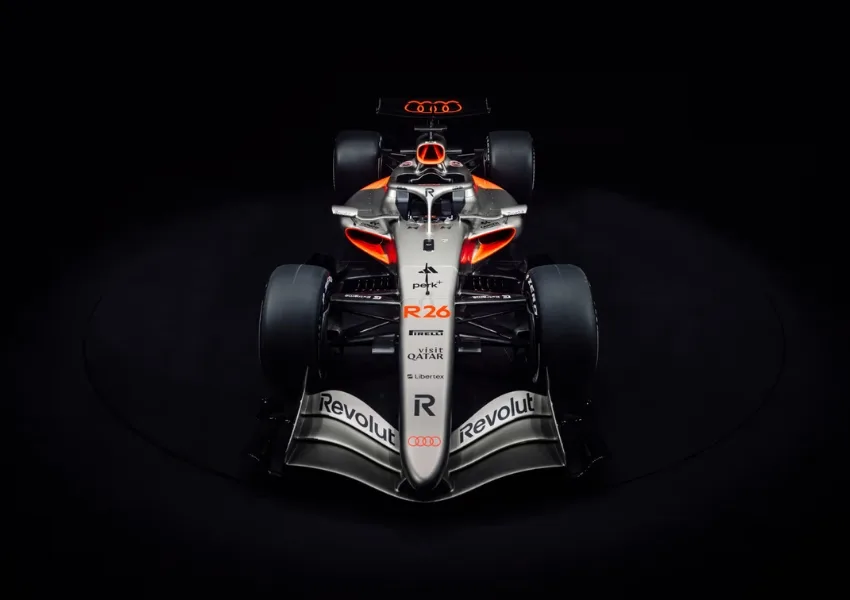

Audi R26, Formula 1
Image Credit: Formula1
Audi’s arrival in Formula 1 has been building for a while, but now it finally has a real shape, a real sound, and a real identity. In a stunning launch event at Kraftwerk Berlin, Audi officially revealed its first-ever Formula 1 car for the 2026 F1 season, marking a major milestone for the brand’s long-term vision in Formula 1 & motorsports.
This is not Audi entering quietly, or as a side project. You’re looking at a full-scale, factory-backed effort with serious intent, built around a clean-sheet approach and Audi’s own first Formula 1 power unit. With the 2026 F1 regulations set to reshape the sport, Audi is choosing the perfect moment to start fresh and position itself as a long-term contender.
A High-Impact Reveal in the Heart of Berlin
Instead of doing a typical studio presentation, Audi chose to introduce its new era inside a historic power station in Berlin, giving the reveal the kind of scale you’d expect from a manufacturer that understands storytelling as much as engineering.
The launch brought together key figures who will shape Audi’s first seasons on the grid: Audi CEO Gernot Döllner, head of the Audi F1 project Mattia Binotto, team principal Jonathan Wheatley, and drivers Nico Hülkenberg and Gabriel Bortoleto. The point was clear: this isn’t a concept announcement. This is Audi stepping in as a fully committed works team.
Audi R26 Livery
The car itself, known as the Audi R26, came wrapped in a striking livery that feels very Audi—sharp, technical, and bold without trying too hard. The titanium tones, carbon fibre elements, and lava red accents create a strong first impression, and the design was already teased in Munich last November.
But seeing it fully revealed as a Formula 1 machine makes it land differently. Among this season’s big F1 livery reveals, Audi’s effort feels like a statement of purpose, not just paintwork. It’s modern, aggressive, and clearly built to stand out in the new era.
A Works Team Debut With Long-Term Thinking
Audi first announced its intention to enter Formula 1 back in August 2022. Now, you’re seeing what that commitment looks like in full. Döllner described this moment as more than a launch, framing it as the public start of a new chapter for the company itself.
Audi has also made its ambition clear. The team isn’t aiming to simply exist on the grid—it wants to be competing for the World Championship by 2030. That’s a bold target, but it also shows Audi understands what Formula 1 demands: time, patience, and relentless development.
Binotto’s Focus
Mattia Binotto made it clear that Audi’s biggest strength comes from entering Formula 1 as a full works operation. That means Audi isn’t relying on outside compromises when it comes to development and direction.
The power unit work is being handled in Neuburg, while the chassis development is tied across the team’s facilities in Hinwil and Bicester. Audi’s message is that this kind of integration gives them agility and control, allowing decisions to be made faster and performance to be found without delay.
Bold addition: In modern Formula 1, teams that link chassis and power unit priorities early often adapt faster when regulations shift, which is exactly what 2026 is expected to bring.
Early Running Before the Real Battle Begins
Audi has already been active on track, becoming the first team to run a 2026-spec car during a filming day at Barcelona earlier this month. After the Berlin reveal, the team will return to Barcelona again for Shakedown Week, where all 11 Formula 1 teams will have three days of running.
That early track time matters more than it seems. At this stage, it’s less about lap times and more about validating systems, refining feedback loops, and gathering real-world data before the pressure of a full season kicks in.
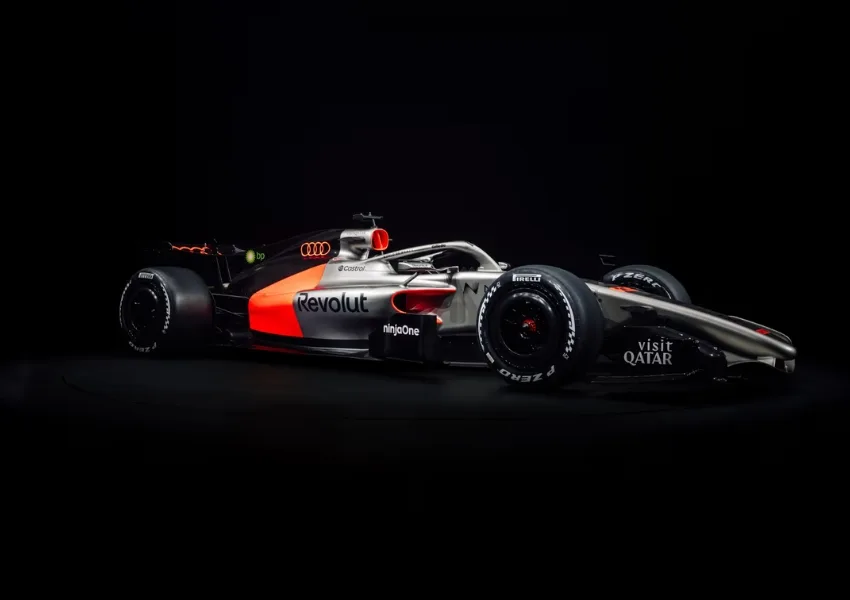
Audi Formula 1
Image Credit: Formula1
Wheatley Sets the Culture
Jonathan Wheatley, who joined after nearly 20 years at Red Bull, described the R26 as the product of thousands of hours of work across Audi’s facilities. But he also called this “day one” of a much bigger campaign.
His focus is on building a culture that can sustain growth: precision in execution, resilience under pressure, and constant curiosity. It’s the kind of language you expect from someone who understands that performance isn’t just designed—it’s built through habits repeated every week.
Hülkenberg and Bortoleto Bring Continuity Into 2026
Audi’s driver pairing also adds a layer of stability. Nico Hülkenberg and Gabriel Bortoleto raced together last year, and they now reunite for this new chapter. Hülkenberg brings experience and a calm perspective, while Bortoleto brings the kind of hunger you want in a long-term project.
Here’s what this pairing gives Audi immediately:
- A balanced mix of experience and fresh energy
- Strong communication during early development stages
- A partnership that can grow with the team rather than reset each year
Hülkenberg described Audi’s approach as serious and well-backed, saying the energy inside the project feels different. Bortoleto called it a dream opportunity, especially with Audi’s motorsport legacy behind it.
Conclusion
When you look at the Audi R26 reveal as a whole, it feels less like a one-off event and more like the opening move in a long plan. With the Audi F1 2026 project, a clear works team debut strategy, and momentum already building through early testing, Audi is putting itself in position to grow season by season.
You’re not just watching a team join Formula 1. You’re watching a brand arrive with patience, resources, and a clear identity—right at the moment the sport is about to transform again.