
Mercedes AMG W17 Ushers in a New Chapter for Formula 1
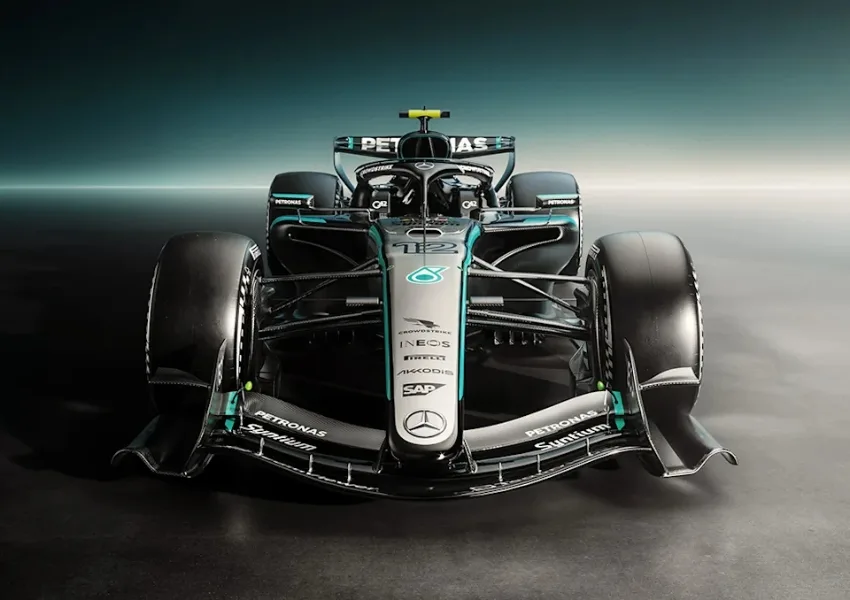

Mercedes AMG W17
Image Credit: Mercedes
Formula 1 doesn’t start over very often, but in 2026, it does. Each team has had to rethink its roots due to significant technological advancements aimed at making cars smaller, utilizing active aerodynamics, and transitioning to electric power. The W17 E PERFORMANCE is what Mercedes-AMG PETRONAS has to offer. This car doesn’t carry on from the past; instead, it’s a clear break from it.
Unveiled in late January 2026, the W17 represents Mercedes stepping away from the compromises of the ground-effect era and embracing the FIA’s new “nimble car” philosophy. If you’re looking for a car that signals intent rather than evolution, this is it.
A Livery That Signals a Return to Identity
Visually, the W17 feels deliberate. While carbon black remains part of the equation for weight savings, Mercedes has leaned back into its Silver Arrows heritage in a more confident way. The nose and forward bodywork return to classic silver, gradually blending into a darker rear section.
A flowing strip of PETRONAS turquoise runs low along the chassis, accentuating the car’s shorter wheelbase and tighter proportions. Look closer and you’ll spot AMG rhombus patterns worked into the sidepods, a subtle nod to Mercedes’ performance road cars. The engine cover features a familiar star pattern, while Microsoft branding appears prominently on the airbox, highlighting the team’s growing reliance on cloud-based simulation and race strategy tools.
The result isn’t flashy—it’s intentional. This is a livery designed to feel technical, purposeful, and unmistakably Mercedes.
Built Around the “Nimble Car” Concept
The biggest structural shift for 2026 is scale. The W17 is shorter, narrower, and lighter than its predecessor, targeting the FIA’s 770kg minimum weight and a reduced 3400mm wheelbase. The goal is simple: make cars more agile and better in close racing.
Aerodynamics play a central role here. Traditional DRS is gone, replaced by fully active systems that operate in two modes:
- Z-mode prioritizes downforce for corners, increasing grip when precision matters most.
- X-mode flattens wing elements on straights, reducing drag and improving efficiency rather than outright speed bursts.
Mercedes’ front wing pylons and nose structure create a clear airflow channel beneath the chassis, helping stabilize the floor despite the reduced ground-effect reliance. It’s a solution that reflects lessons learned from previous regulation cycles rather than chasing extreme concepts.
A New Power Balance from Brixworth
At the heart of the W17 sits the Mercedes-AMG High Performance Powertrains 2026 engine, developed in Brixworth. The headline change is the 50/50 power split between internal combustion and electrical output.
With the MGU-H removed, the spotlight shifts to a massively uprated 350kW MGU-K. Energy recovery jumps significantly, forcing teams to rethink braking, lift-and-coast strategies, and deployment zones throughout a lap. Fuel flow is capped at 75kg per hour, and the car runs entirely on PETRONAS-developed sustainable fuel.
Rather than chasing peak numbers, Mercedes appears focused on efficiency and thermal stability—areas that matter far more over a full race distance in the new era.
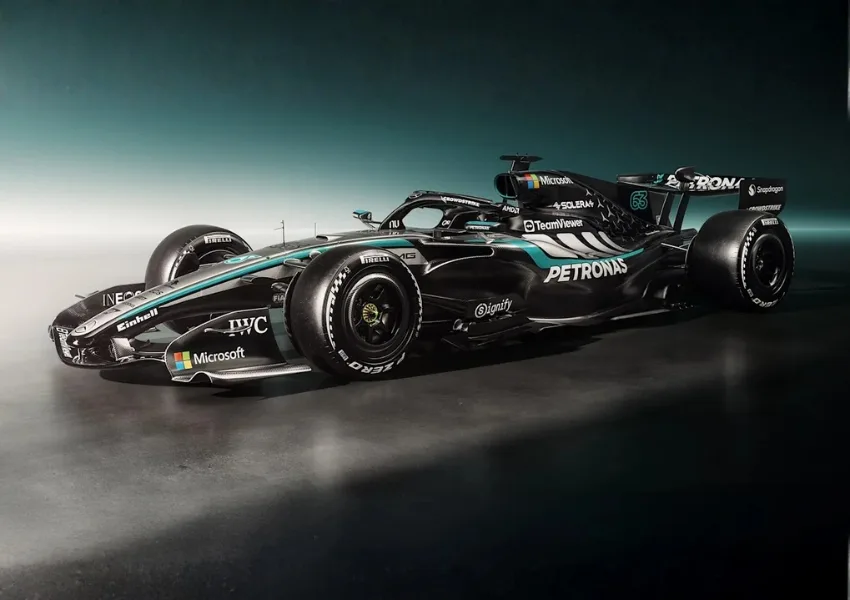
Mercedes F1 2026
Image Credit: Mercedes
Pushrod Simplicity and Mechanical Focus
While some teams have experimented with aggressive suspension layouts, Mercedes has retained a pushrod front suspension for the W17. The reasoning is practical: reduced complexity, predictable setup behavior, and easier weight management.
Mechanical grip is expected to play a bigger role in 2026 as downforce levels normalize. The W17’s suspension philosophy reflects that shift, favoring consistency over innovation for its own sake.
Russell and Antonelli
The driver lineup mirrors the car’s transitional nature. George Russell enters 2026 as Mercedes’ clear lead driver, carrying momentum from a strong 2025 season. His feedback has reportedly played a major role in shaping the W17’s balance and drivability.
Alongside him is Kimi Antonelli, now in his sophomore year. After flashes of speed and early podium finishes as a rookie, the focus shifts to avoiding a sophomore slump. Mercedes has structured the garage to support Antonelli’s development without placing unrealistic expectations on him too soon.
If the W17 performs as intended, this pairing could prove quietly effective rather than headline-grabbing.
A Reset Built on Clarity
The Mercedes-AMG F1 W17 doesn’t try to reinvent Formula 1. Instead, it reflects a team that has learned from recent struggles and responded with focus. Active aerodynamics, a simplified power unit architecture, and a lighter, more agile chassis point toward a philosophy built on clarity rather than complexity.
As the 2026 season approaches, the W17 stands as Mercedes’ attempt to realign itself with the sport’s future, without forgetting the principles that once made the Silver Arrows dominant.
Only when the lights go out will we know if the reset is enough to return them to the top. But for the first time in several seasons, Mercedes looks comfortable with the direction it has chosen.