
2028 Hypercar Debut for Czinger 21C Spyder
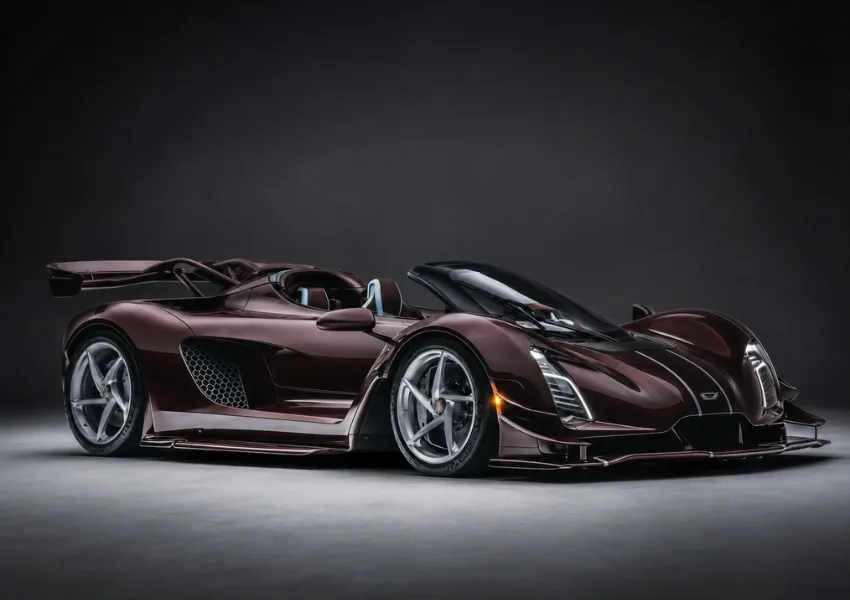

Image Credit: Czinger | Czinger 21c spyder
The Czinger 21C Spyder takes the already wild 21C formula and removes the roof without removing the madness. This 2028 open top hypercar brings 1,250 horsepower, tandem seating, 3D-printed engineering, and enough downforce to make the air feel like a physical part of the car.
Here’s the thing. Most roofless supercars lose some edge when they go open-air. More weight comes in. Stiffness drops. Aero changes. The car becomes a little more lifestyle, a little less weapon.
Czinger clearly didn’t want that. The 2028 Czinger 21C Spyder looks like it was designed to attack a circuit with the roof off and still make the driver feel every pound of pressure from that towering aero package.
Czinger 21C Spyder Keeps the Drama Open
The first shock is the shape. The Czinger 21C Spyder doesn’t follow the usual wide-cabin supercar layout. It keeps the brand’s fighter-jet-style tandem seating car arrangement, with the passenger sitting directly behind the driver. That narrow cockpit gives the car its signature blade-like profile. It also helps airflow move cleanly around the body, which matters when a car is trying to create extreme downforce at hypercar speeds.
With the removable roof panel in place, the Spyder produces a claimed 3,307 pounds of downforce. Roof off, it still makes 3,267 pounds at 150 mph. That’s barely a drop, and for an open-top hypercar, it’s ridiculous in the best way. Better yet, the added structure reportedly increases dry weight by only 22 pounds. That’s the kind of number that tells you this wasn’t treated as a soft convertible spin-off.
Hybrid Power With Serious Intent
Power comes from a twin-turbo 2.88-liter V8 paired with electric motors. The combined output stands at 1,250 hp, placing the American hypercar deep into modern hybrid hypercar territory.
The gas engine alone makes 750 hp, while the electric side adds instant shove at the front axle. That setup gives the car traction, torque fill, and sharper launch behavior than a pure rear-drive monster could manage easily.
Czinger claims 0–60 mph in 1.9 seconds, an 8.7-second quarter-mile, and a 205-mph top speed for the Spyder. Those numbers don’t just sound fast. They sound violent. The seven-speed sequential transaxle adds to the motorsport flavor. This isn’t a luxury cruiser with big power. It’s a focused machine built around response, grip, and speed.
Key Specs
- Model: 2028 Czinger 21C Spyder
- Powertrain: 2.88-liter twin-turbo V8 hybrid
- Output: 1,250 hp combined
- 0–60 mph: Claimed 1.9 seconds
- Quarter-mile: Claimed 8.7 seconds
- Top speed: Claimed 205 mph
- Downforce: 3,267 pounds at 150 mph with roof removed
- Seating: Tandem driver-passenger layout
- Production: 30 units worldwide
- Starting price: Around $2.75 million
Czinger 21C Spyder Aerodynamics Feel Extreme
The Czinger 21C Spyder is all about air management. The front aero, huge swan-neck rear wing, deep channels, and underbody treatment all work toward one goal: push the car into the road. A normal convertible celebrates air in the cabin. This one weaponizes air around the body.
That’s what makes the Czinger 21C Spyder aerodynamics story so interesting. The roof-off setup keeps almost the same downforce as the roof-on version, which suggests the airflow was engineered with the open cockpit from the start instead of patched later. For track-focused drivers, that matters. Downforce creates grip at speed. More grip means later braking, faster cornering, and more confidence when the road course stops being friendly.
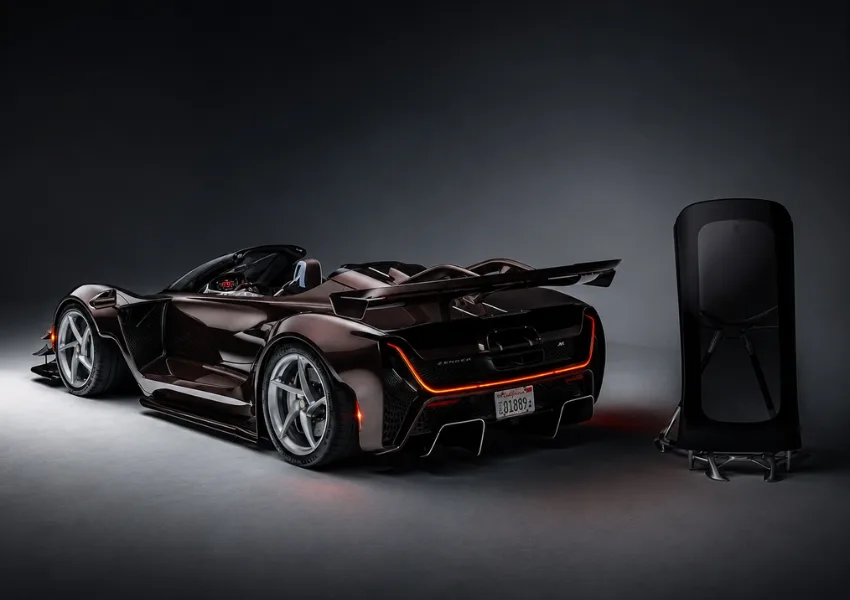 Image Credit: Czinger | 2028 Czinger 21C
3D Printing Is the Real Party Trick
The 3D printed hypercar label isn’t just marketing noise here. Czinger’s broader engineering identity comes from additive manufacturing and AI-supported design, allowing complex components that traditional manufacturing would struggle to build efficiently. The Czinger 3D-printed chassis and structural components help create shapes that look skeletal but serve a purpose. Less waste. Less mass. More stiffness where the car needs it.
The Spyder also introduces a 3D-printed braking assembly that integrates parts normally made separately, including braking and suspension-related hardware, according to early reports. That kind of engineering matters because unsprung weight affects how quickly the suspension can react to the road. Lower unsprung mass usually means better control, sharper feedback, and improved grip over imperfect surfaces.
Why the Tandem Layout Still Works
The Czinger tandem seating layout won’t appeal to everyone. It’s unusual, intimate, and very far from the normal supercar cabin experience. But it fits the mission.
Sitting on the centerline gives the driver a more focused view of the road. The car feels less like a wide exotic and more like a road-legal prototype. The passenger sits behind, almost like a fighter jet co-pilot. That layout also keeps the body narrow and aerodynamic. In a car chasing downforce, speed, and efficiency, that trade-off makes sense.
Production, Price, and Rarity
Only 30 Spyder units are expected worldwide, with pricing starting around $2.75 million.
That makes the 2028 Czinger 21C more than a supercar debut. It’s a collector-grade performance statement from an American hypercar brand still proving how far its manufacturing philosophy can go. At this level, buyers aren’t just paying for acceleration. They’re paying for rarity, engineering theater, and a car that feels genuinely different from the established European hypercar template.
Conclusion
The Czinger 21C Spyder is not simply a 21C with the roof removed. It’s a full-strength open-air hypercar that keeps the brand’s wild tandem seating, hybrid V8 power, 3D-printed structure, and extreme downforce nearly intact. The 1,250-hp output grabs attention first, but the bigger story is how little performance drama seems to be lost in the move to an open cockpit. With only 30 units planned, a claimed 1.9-second sprint to 60 mph, and 3,267 pounds of roof-off downforce at 150 mph, this Spyder feels less like a convertible and more like a track weapon that happens to let the sky in.